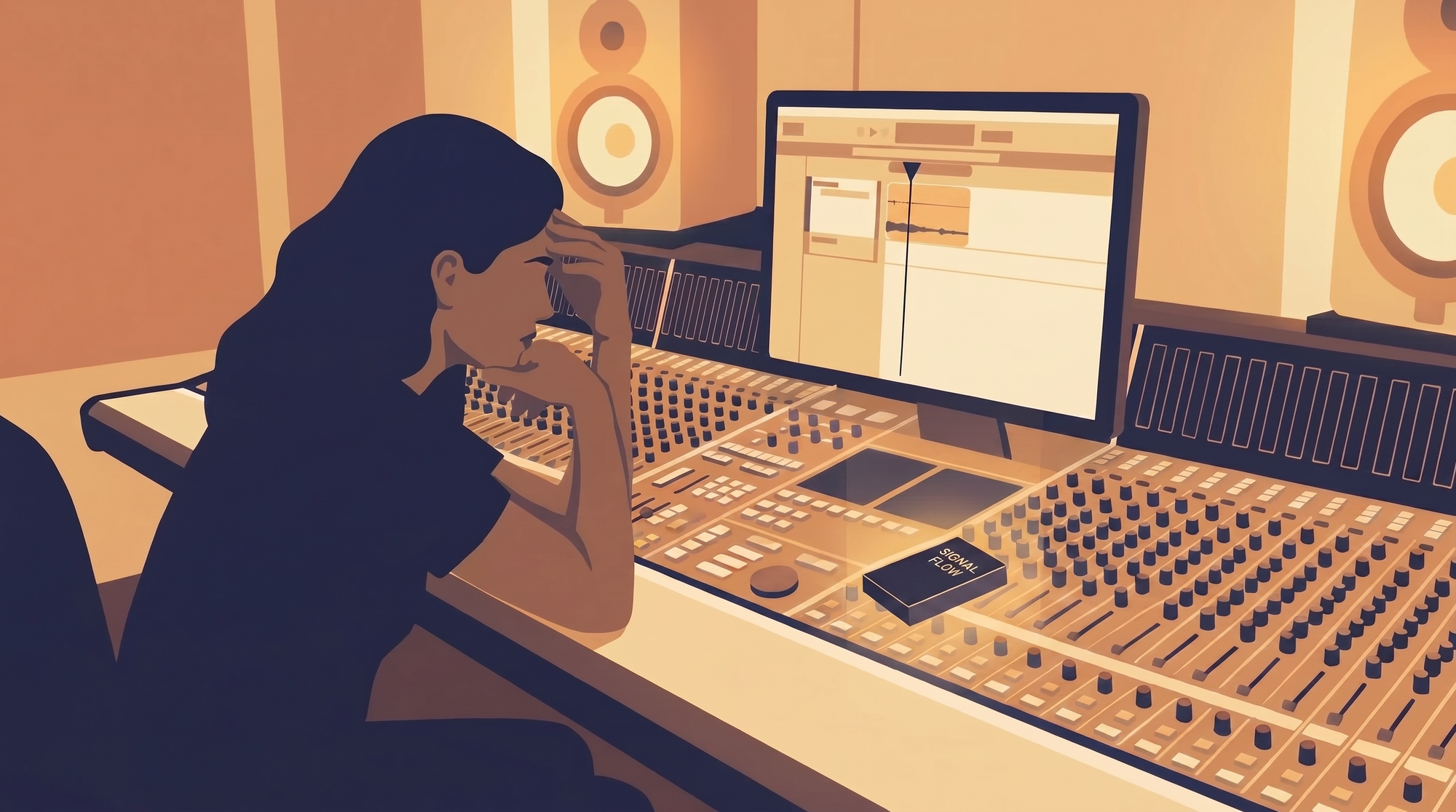
Every producer knows the moment.
The loop is playing. The idea has promise. But the session has stopped moving. You tweak a synth. Adjust the EQ. Audition another snare. The project isn't finished, but somehow nothing is changing.
Signal Flow was born far from a studio.
One afternoon, I was watching children at a playground. They would invent a game, play for a minute or two, and then—without missing a beat—someone would announce a new rule.
“Now you can only hop.”
“The floor is lava.”
“You have to close one eye.”
No one questioned it. The new rule didn't interrupt the game. It kept it alive. Every new constraint opened new possibilities, and the play continued without hesitation.
It struck me that great creative work often happens the same way.
When we're stuck, the answer usually isn't more options. It's a simple prompt that changes the way we're approaching the work. A small rule that shifts our perspective and gets us moving again.
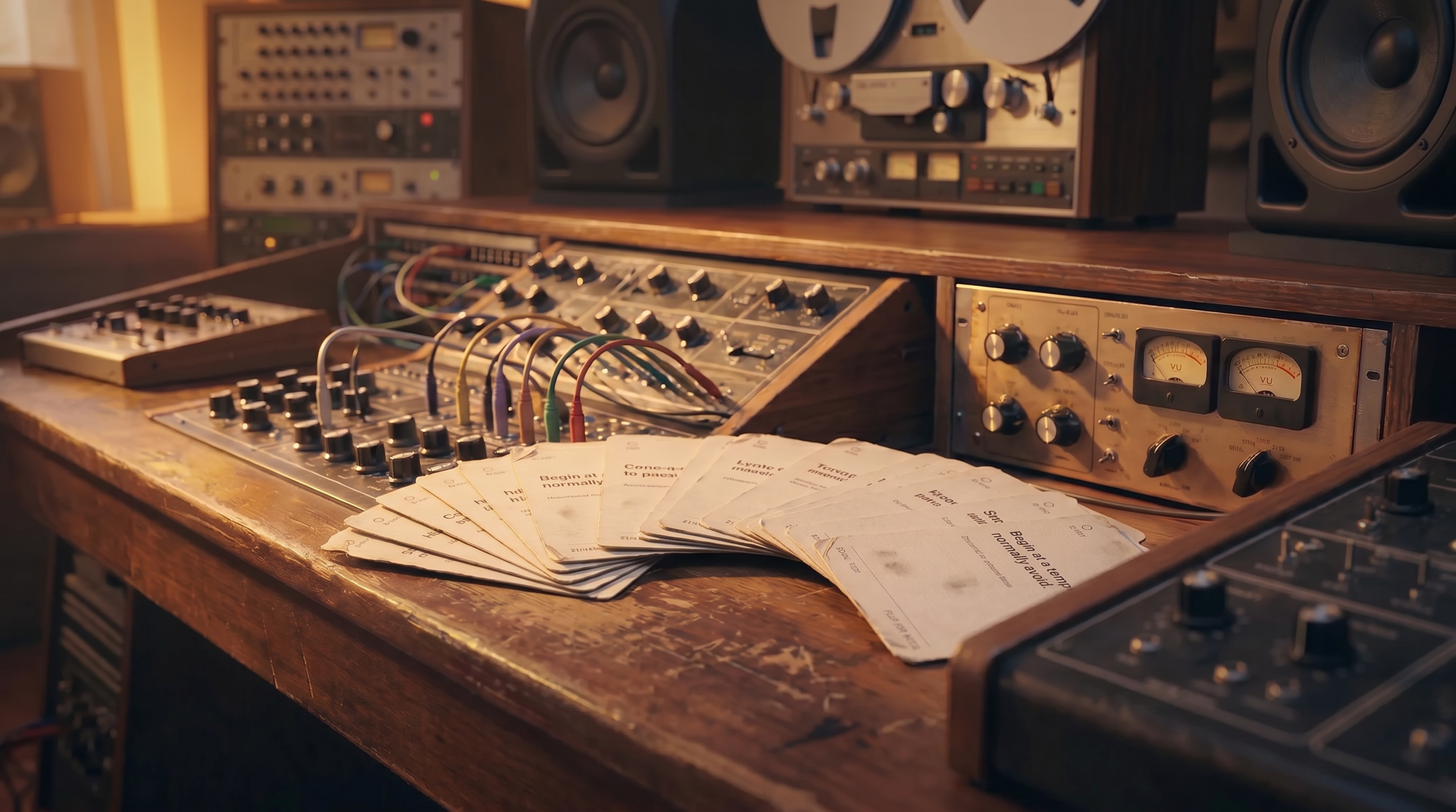
That's why I created Signal Flow — a printed deck of cards, one prompt per card, made to live next to your keyboard. The name is borrowed from the path a signal travels through the studio. Take One is the first deck in the series.
Each card introduces one practical constraint or action designed to break the stalemate: remove something instead of adding it, change the arrangement before changing the sounds, commit to a decision, bounce the track, listen from a different perspective, or share the work before it feels finished.
They're not meant to tell you how to make music. They're meant to help you keep making it.
Because finished tracks rarely come from waiting for inspiration.
They come from staying in motion.
The deck is here for the next time your session stalls.
The maker
Guy Barash is a composer, producer, and music technology consultant based in New York City. His work sits at the intersection of music-making, creative systems, and studio practice. Signal Flow is the tool he wished he had at 2 a.m.